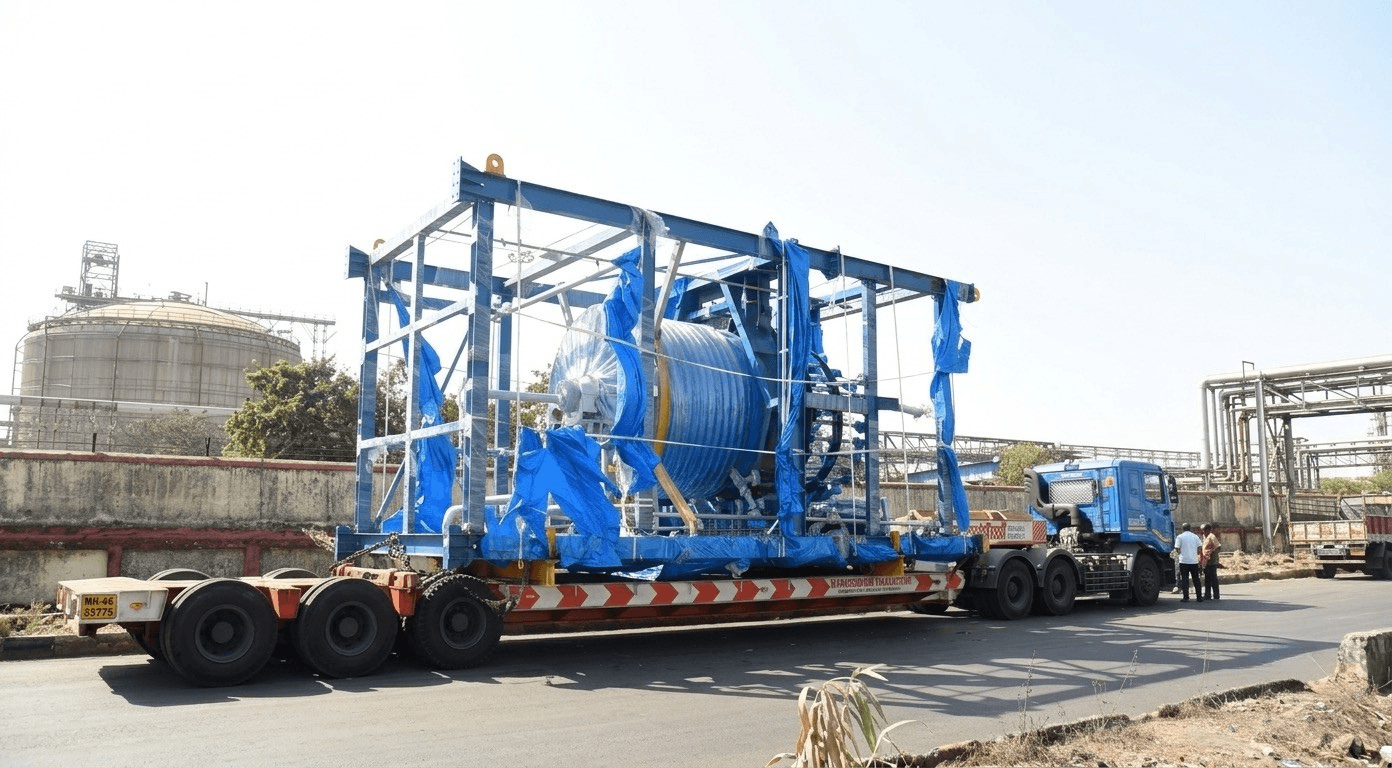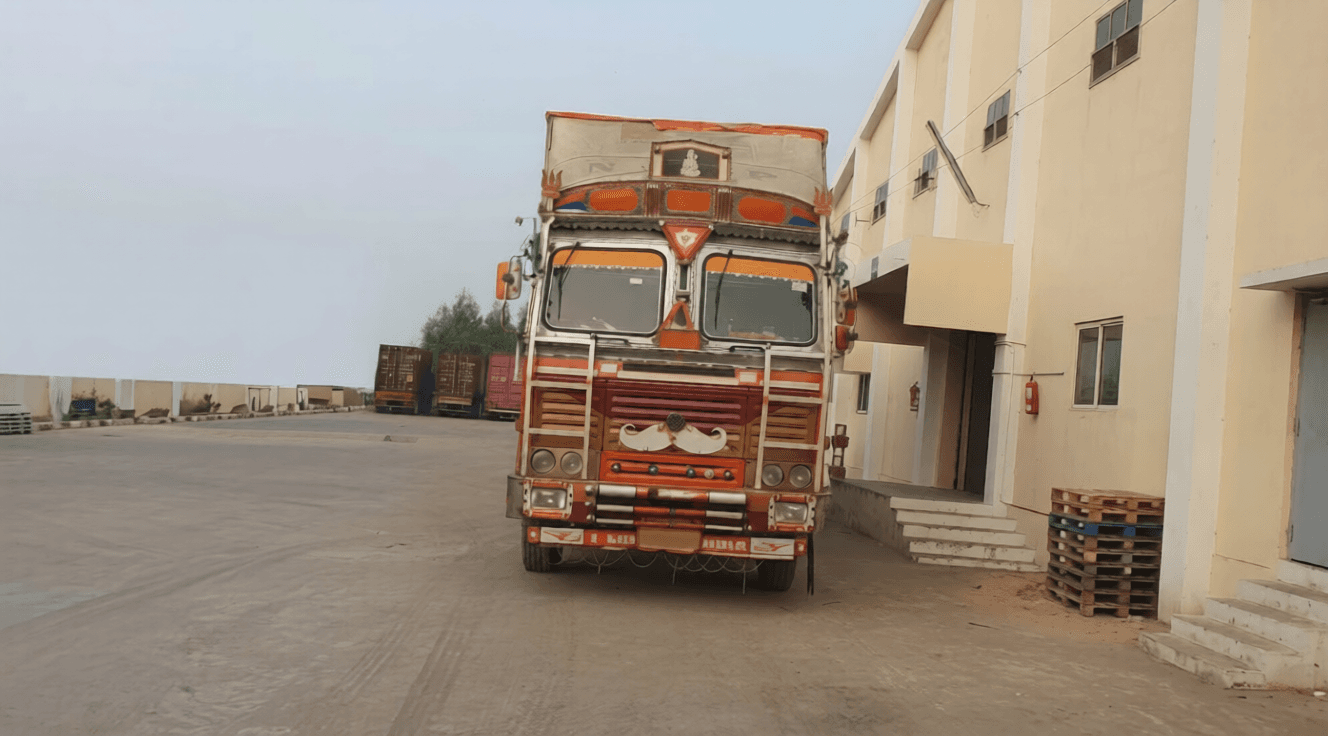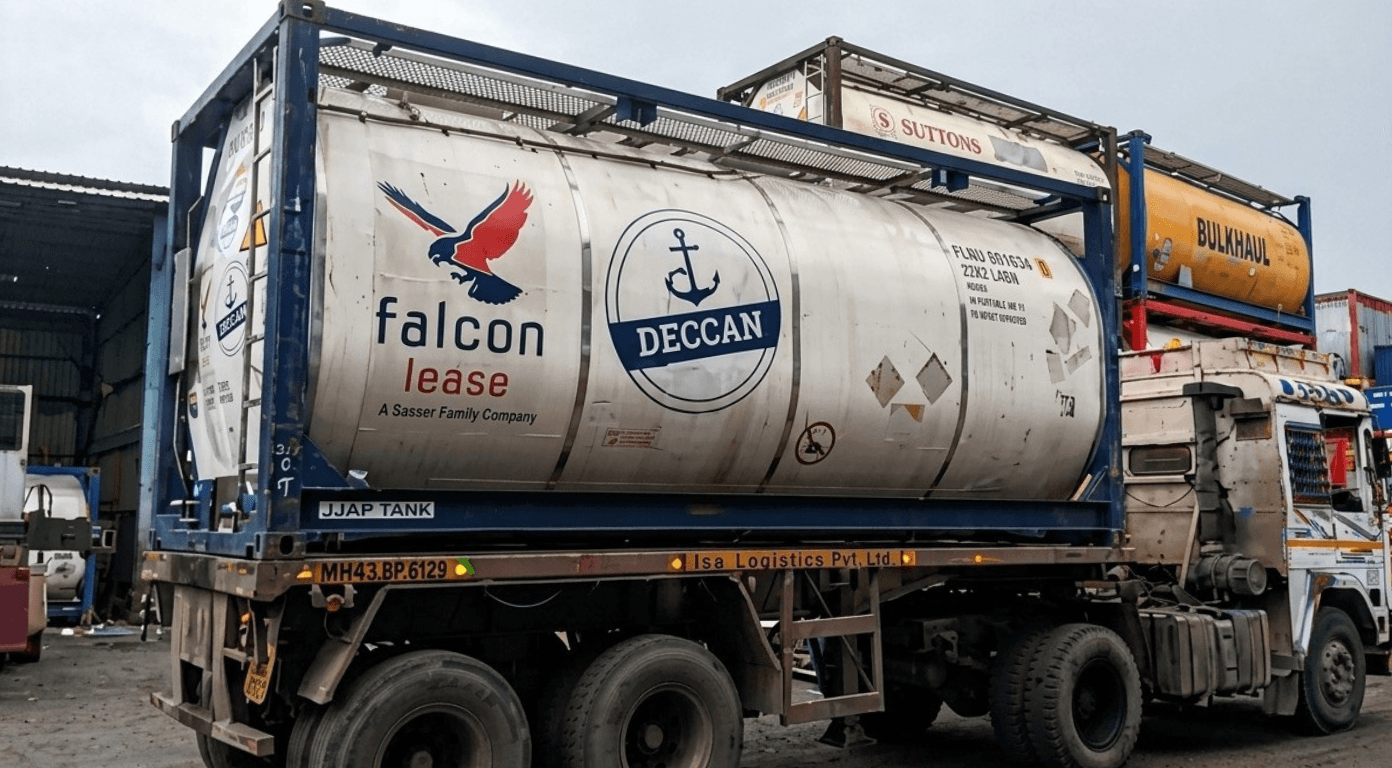
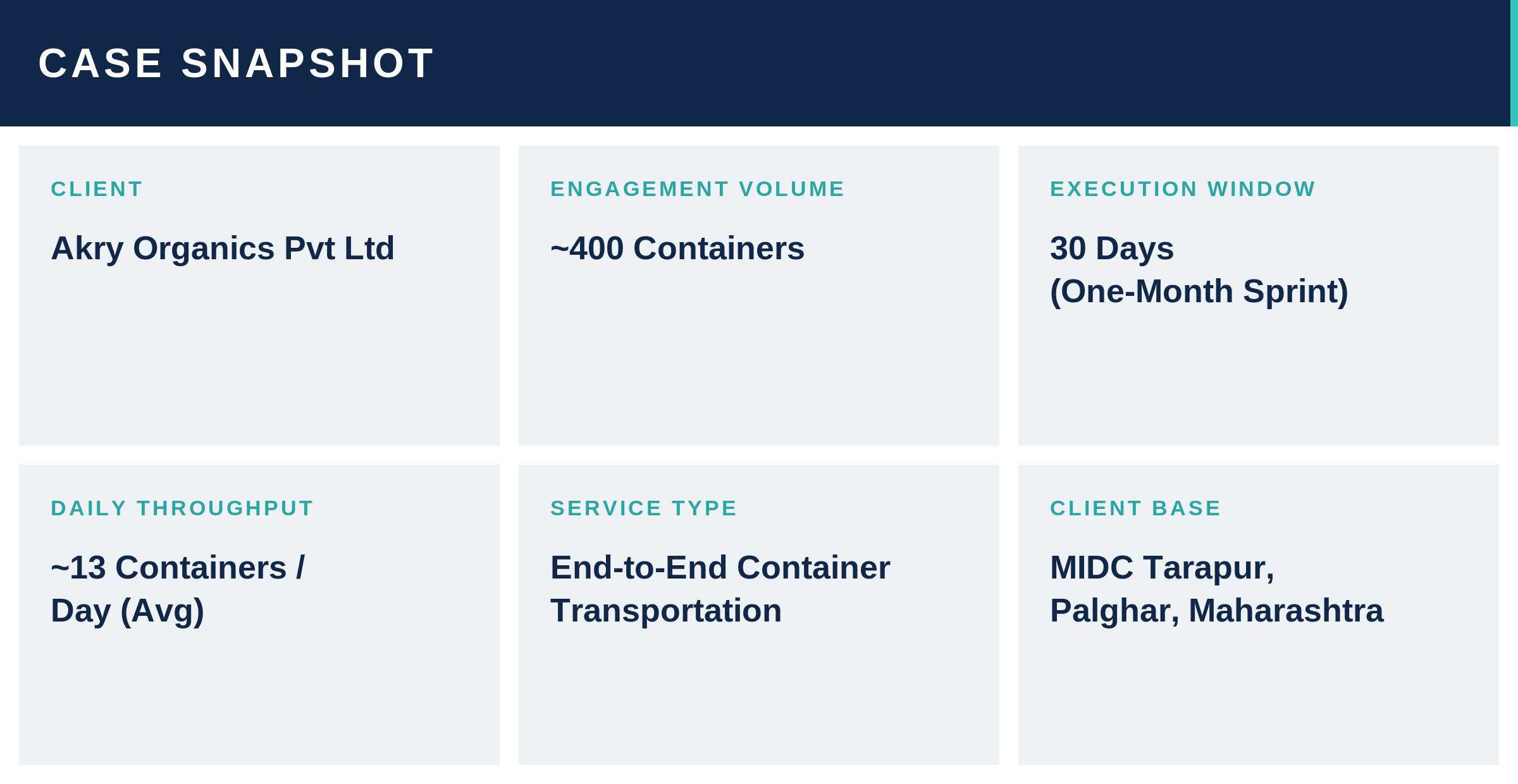
Akry Organics Pvt Ltd, based out of MIDC Tarapur, operates in a time-sensitive supply chain where every shipment must move on schedule. With ~400 containers to be moved inside a 30-day window, the engagement called for a transport partner that could match the pace and the discipline. Isa Logistics built a coordination framework around the volume daily container flows, fleet capacity, single point of contact and delivered the full program on time, with no service breakdowns.
The Client
Akry Organics Pvt Ltd works in a fast-moving supply chain where every shipment must move on time. The company handles large cargo volumes, and even small delays can affect their delivery schedules and customer commitments. They needed a transport partner who could match this pace and manage big numbers without losing control of the process.
The Challenge
The brief was clear but heavy. Akry Organics needed to move close to 400 containers in just one month. The job demanded tight planning, strict service standards, and steady coordination across many touchpoints. Any slip in scheduling could pile up fast. The sheer volume, packed into a 30-day window, was enough to test most transport providers.
Our Approach
Isa Logistics built a plan that was shaped around the volume from day one. We mapped out daily container flows, lined up the right fleet capacity, and set up a coordination framework that connected our operations team, drivers, and the client. A single point of contact handled all updates so Akry Organics always knew where things stood. This setup helped us stay ahead of the schedule rather than chase it, and gave us room to handle surprises without slowing the wider movement.
Execution on the Ground
Movement began on day one and continued steadily through the month. Our team kept a close watch on every dispatch, tracking turnaround times and adjusting routes wherever needed. Drivers reported in at each milestone, and operations stayed in sync with Akry Organics' warehouse and shipping windows. Even on peak days, the rhythm held without disrupting their wider supply chain.
The Outcome
Around 400 containers delivered within the committed period
Operational requirements met with no major service breakdowns
Steady, predictable performance through a high-pressure month
Proof that scale and discipline can sit together
In the Client's Words
“Isa Logistics demonstrated structured planning, timely execution, and consistent coordination throughout the movement. Container movements were managed efficiently with clear communication and dependable follow-through.”
— Mr. Bhavesh Shiyal
Import Manager, Akry Organics Pvt Ltd