Industrial automation equipment demands specialised logistics due to its size, weight, and precision. This blog explores the key challenges in ODC and heavy lift transportation from route planning and heavy lifting to port coordination and project execution and explains why integrated project cargo logistics is critical for delivering complex industrial equipment safely and on schedule.
India's push to become a global electronics manufacturing hub is pulling in serious investment. Companies like Jabil and YCH are building out manufacturing ecosystems across the country, and that's driving demand for industrial automation equipment at a pace the logistics sector has to keep up with.
Picture a new plant that's fully built, utilities connected, engineers standing by for installation and production still can't start because a robotic assembly cell hasn't cleared its ODC movement permit. In industrial automation, logistics isn't a supporting function. It decides when a factory actually goes live.
Robotic assembly lines, SMT production lines, automated storage systems, large electrical control panels most of this equipment qualifies as Over Dimensional Cargo (ODC) or Out of Gauge (OOG) cargo. Moving it needs specialised ODC cargo transport, heavy lift logistics, and project cargo services built for the job, not adapted from standard freight processes.
Industrial Automation Equipment Doesn't Move Like Standard Cargo
This equipment is engineered for precision, not for a truck bed. Unlike palletised or containerised freight, it often exceeds standard transport dimensions or needs specific handling to avoid damage in transit.
An SMT production line is a good example. It's usually made up of several precision machines that have to arrive together and stay calibrated right up to installation. Robotic welding cells, automated storage and retrieval systems (ASRS), process skids, transformers, and control panels typically call for Flat Rack containers, Open Top containers, hydraulic trailers, or breakbulk shipping standard containers won't do.
Before any of this moves, someone has to work out the equipment's dimensions, weight, lifting points, and installation schedule, and match that to the right transport method.
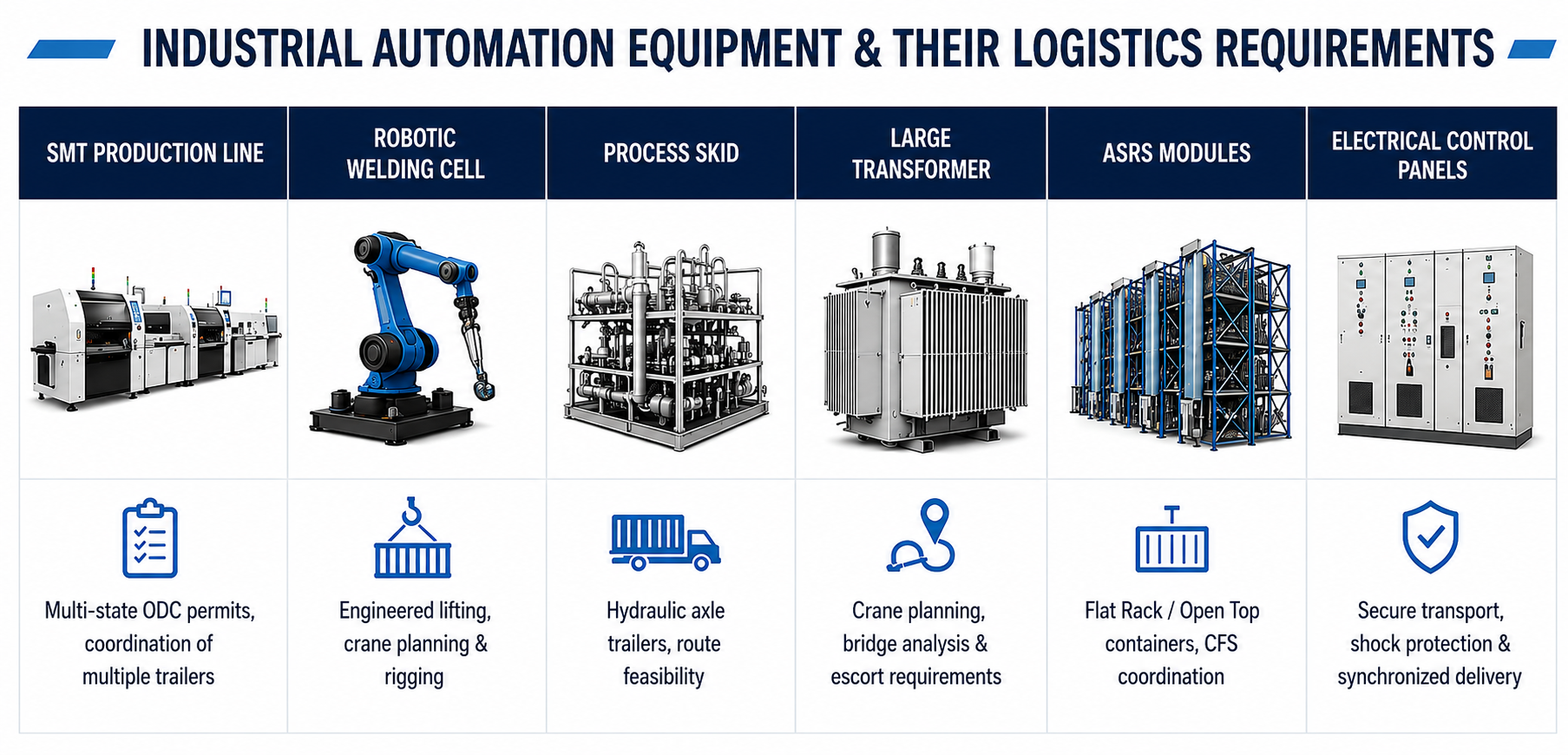
Five Operational Challenges That Define This Kind of Logistics
1. Route planning starts before the truck even loads
Every ODC movement begins with a route survey. Moving an SMT production line from JNPT to a facility in Bengaluru, for instance, means clearing approvals across both Maharashtra and Karnataka. Karnataka often restricts oversized cargo to designated hours on specific corridors, and Maharashtra may require police escorts depending on the load dimensions.
Getting these approvals lined up before dispatch is what keeps the shipment from stalling once it's already on the road.
2. Heavy lift work is engineering, not just muscle
A robotic welding cell or a large transformer is heavy, but the harder problem is getting it to site without throwing off its alignment or structural integrity.
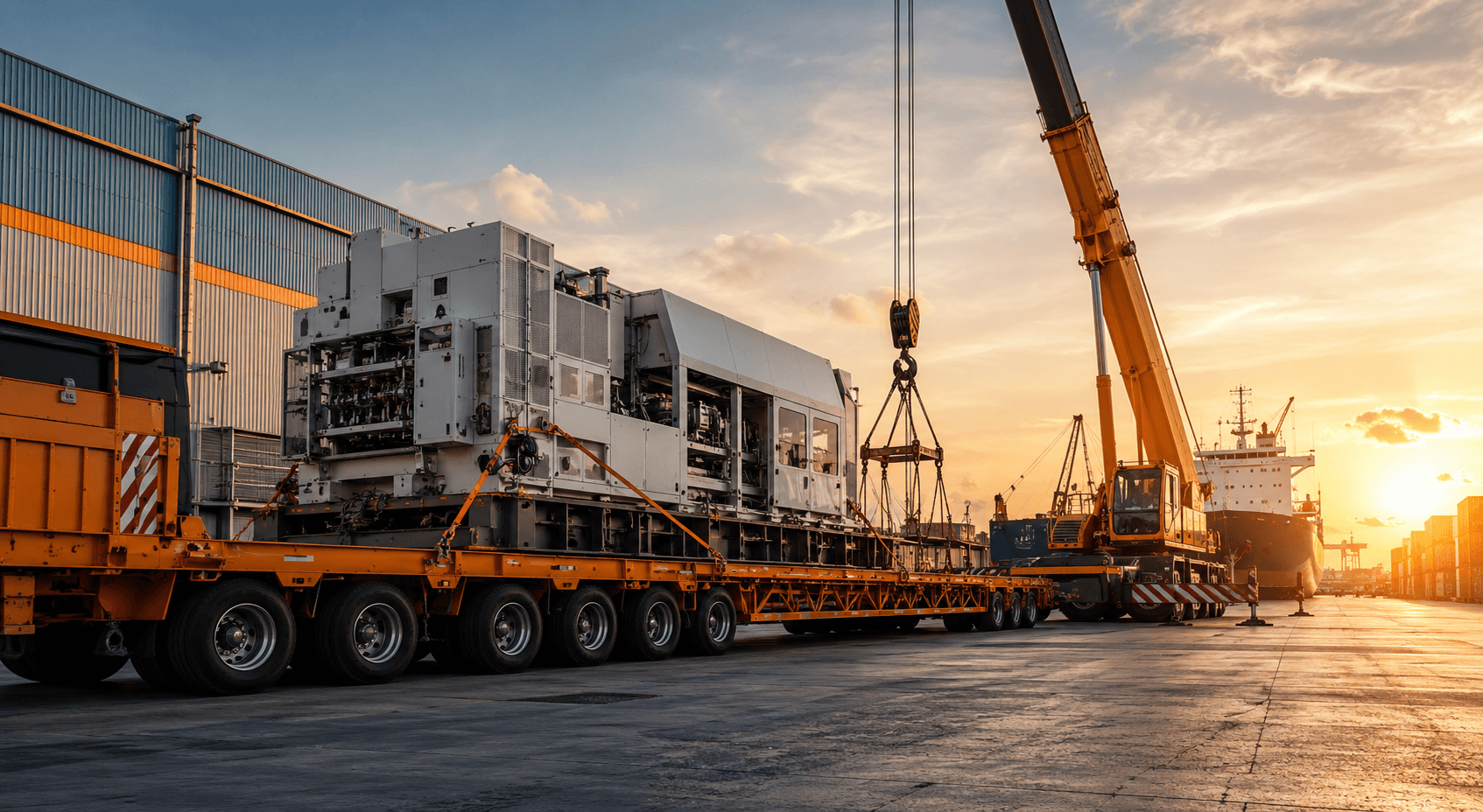
That means choosing the right crane capacity, planning the rigging, working out load distribution, and supervising the lift itself. The goal isn't just moving the cargo it's making sure it's ready to install the moment it arrives.
3. Port and CFS coordination can make or break the schedule
Most industrial automation systems come into India as imports before they're installed on the factory floor.
Take an automated storage and retrieval system arriving across multiple Flat Rack and Open Top containers. If even one module gets held up in customs or at the CFS, the whole installation sequence stalls, because the system can't be assembled with pieces missing.
Keeping customs, CFS operations, surveyors, and vessel planning in sync is what keeps every component moving on the same schedule.
4. Installation timelines don't leave room for slippage
Automation projects run on tight commissioning schedules. If an automated conveyor system is due for installation on Monday and the shipment arrives even a day late, civil contractors, electrical teams, OEM engineers, and commissioning specialists all have to reshuffle and costs start piling up before production has even begun.
For manufacturers, on-time delivery isn't a nice-to-have metric. It's a project milestone.
5. Complex projects need one team running the whole show
A typical shipment like this involves transporters, surveyors, customs authorities, shipping lines, CFS operators, crane suppliers, and site teams all at once.
A process skid might clear customs while state transport permits are still pending. A large control panel might reach the factory before the unloading equipment is even in place. Running transport, customs, permits, CFS operations, and final delivery through one team is what closes these gaps instead of letting them turn into delays.
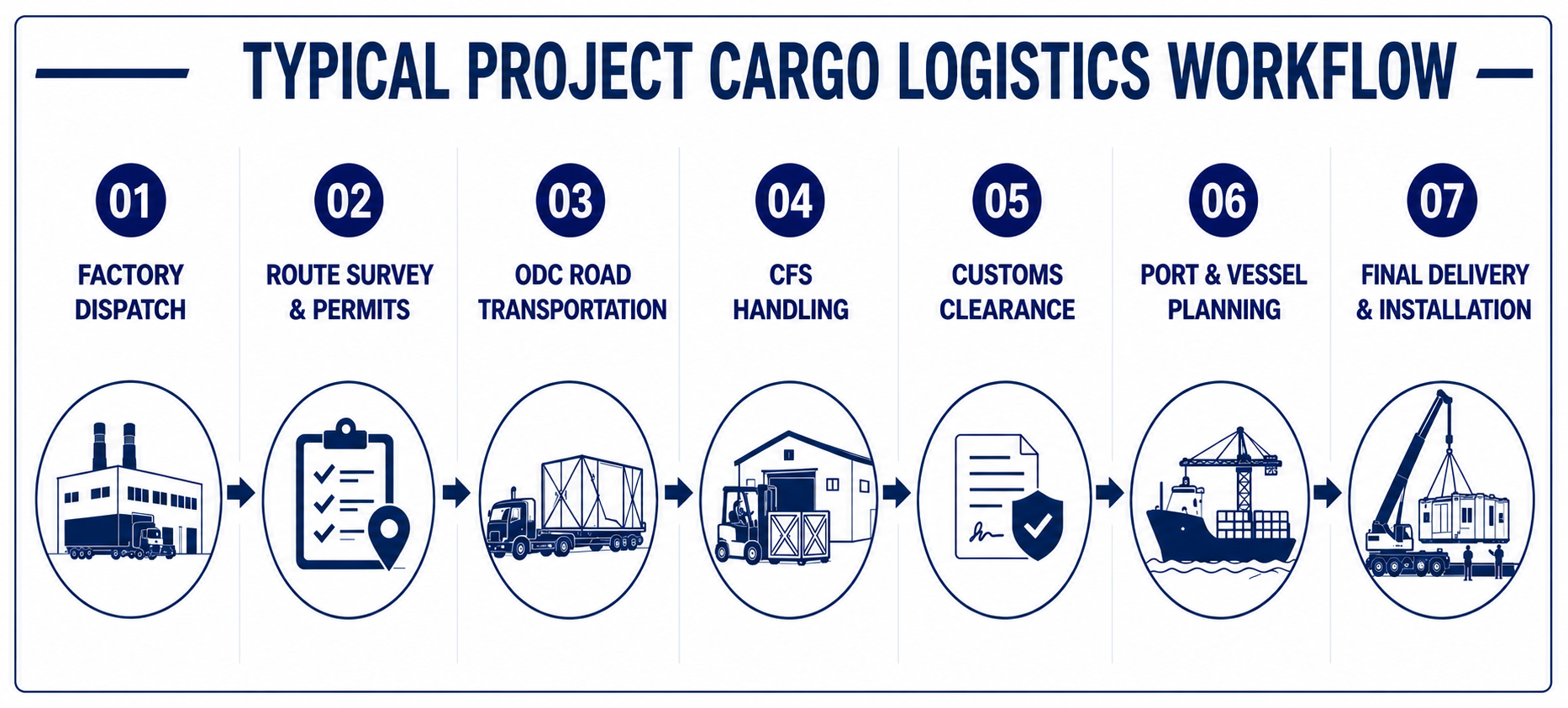
Isa Logistics' Approach to Project Cargo
Industrial automation equipment demands more than transportation it demands execution.
Isa Logistics brings transport planning, customs coordination, CFS operations, and port execution together under one operational framework. Our capabilities include:
Heavy lift logistics for cargo ranging from 20 MT to 50 MT
Handling Over Dimensional Cargo up to 19 ft in width and 19 ft in height
Flat Rack, Open Top, and breakbulk cargo handling
Complete ODC cargo transport planning, including route surveys and permit coordination
Coordination with surveyors, transport authorities, shipping lines, and port stakeholders
Single-window execution across transportation, customs, CFS operations, and vessel loading.
Managing every stage under one team means manufacturers deal with less coordination complexity, while keeping control over timelines, compliance, and cargo safety.
Conclusion
As India's industrial automation and electronics manufacturing sectors keep growing, moving oversized equipment has turned into more than a transport challenge it takes detailed planning, specialised handling, regulatory coordination, and execution across a lot of moving parts at once.
The right project cargo logistics partner ties all of it together ODC cargo transport, heavy lift logistics, customs clearance, CFS handling, and final delivery toward one goal: getting the manufacturing facility operational without unnecessary delay.
Frequently Asked Questions
What is ODC cargo in industrial automation projects?
ODC (Over Dimensional Cargo) is equipment that exceeds the standard dimensions or weight limits of conventional transport vehicles or containers. In industrial automation, this covers SMT production lines, robotic cells, automated storage systems, transformers, and other oversized equipment that need specialised ODC cargo transport.
What's the difference between ODC and OOG cargo?
Out of Gauge (OOG) cargo specifically exceeds the dimensions of a standard shipping container and usually needs Flat Rack or Open Top containers. ODC is the broader term for oversized cargo moved by road, rail, or sea. Both need specialised planning.
Why does heavy lift logistics matter for industrial automation equipment?
This equipment tends to be high-value, oversized, and precision-built. Heavy lift logistics gets it lifted, transported, and delivered safely using the right cranes, trailers, and engineered lift plans, cutting the risk of damage and delays.
What does project cargo logistics actually include?
Route surveys, transport planning, permit management, specialised trailers, heavy lift operations, customs clearance, CFS handling, vessel coordination, and final site delivery ideally run through a single execution plan rather than handled piecemeal.
What makes ODC road transport in India difficult?
Bridge load restrictions, overhead utilities, state-wise permits, police escort requirements, movement windows, and route approvals all have to be planned around. Getting ahead of these keeps delays and compliance issues to a minimum.
Which industries need project cargo and heavy lift transport?
Electronics manufacturing, industrial automation, automotive, power generation, oil & gas, chemicals, infrastructure, renewable energy, and heavy engineering all rely on this kind of logistics for oversized machinery.
Why work with an end-to-end project logistics partner?
One provider handling transportation, customs, CFS operations, documentation, port handling, and stakeholder coordination means fewer communication gaps and better visibility which keeps manufacturing and installation schedules on track.