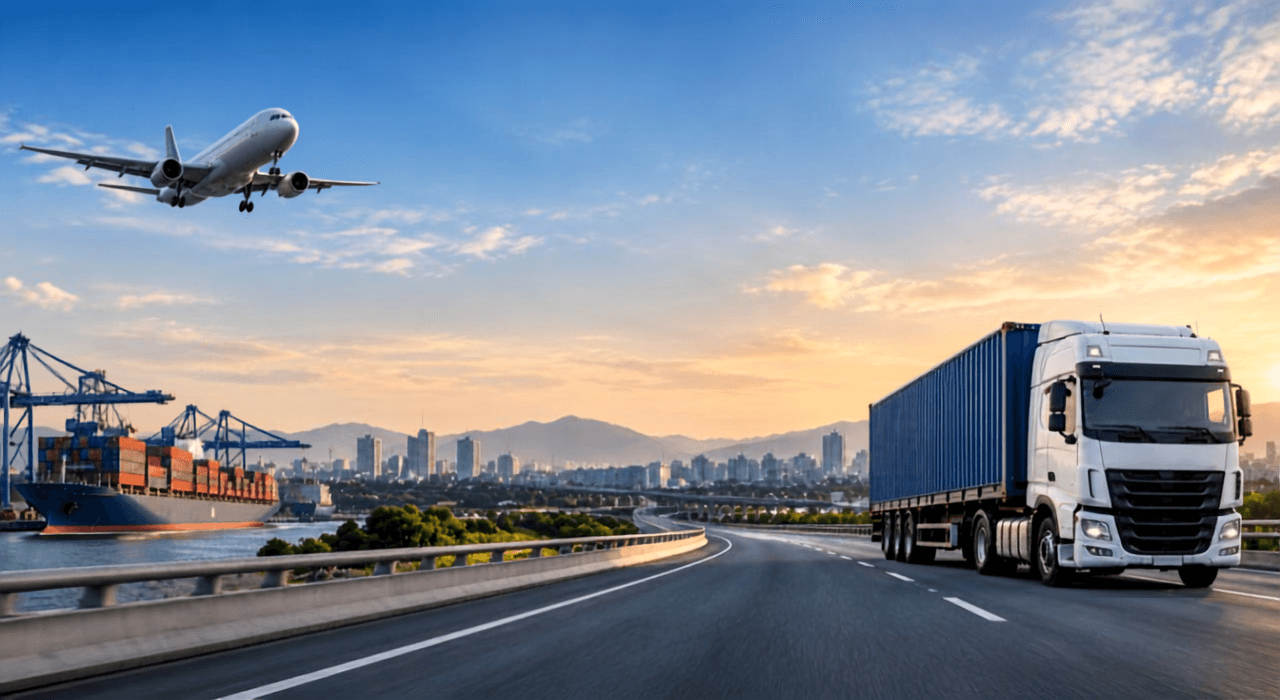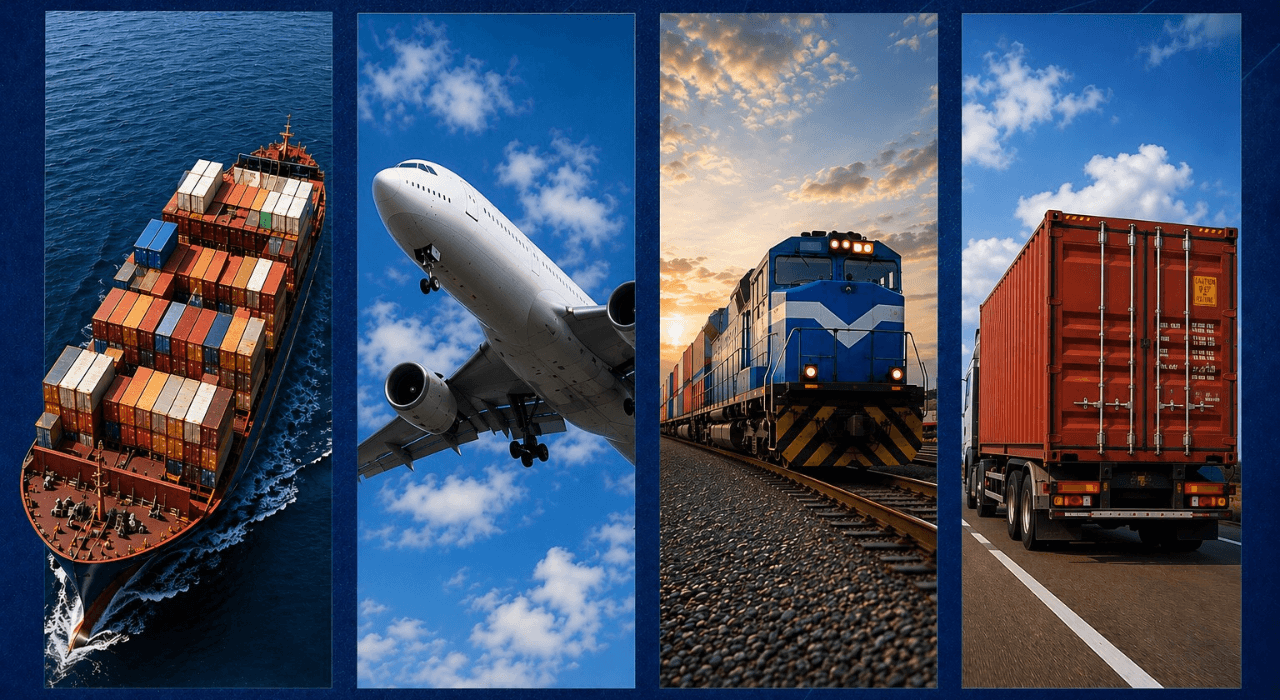
Multimodal freight transport connects road, rail, sea, and air into one coordinated journey. This blog explains how route planning, documentation, shipment visibility, synchronized handovers, and contingency planning help businesses move cargo efficiently across domestic and international supply chains.
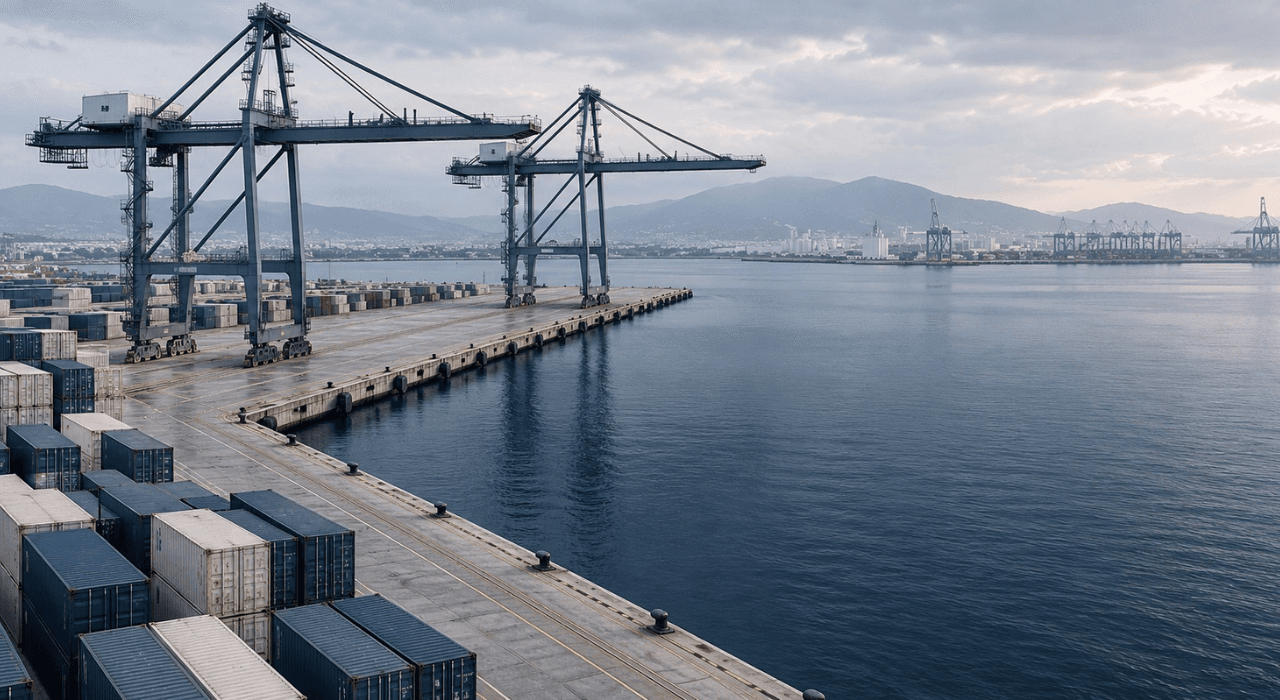
Nhava Sheva's on-time vessel rate dropped from 50% to 33% this year, as containers rerouted from Gulf ports by Red Sea disruptions piled up at Indian terminals that weren't built to absorb them. That's what makes multimodal coordination less of a nice-to-have and more of the whole game when one port backs up, every truck, rail slot and warehouse booking riding on that leg backs up with it.
What Is Multimodal Freight Transport?
It's the movement of goods across two or more transport modes under one contract, run as a single planned journey instead of a string of separate bookings.
Say an exporter in Pune is sending engineering equipment to Germany. The cargo goes by road to Nhava Sheva Port, by sea to Hamburg, then by road again to the customer's warehouse in Germany. Three modes, but one plan covering the whole thing from the factory floor to the final delivery point.
Why bother structuring it this way? Fewer delays, lower costs, fewer nasty surprises halfway through the journey.
What Goes Into Coordinating Multimodal Freight?
Most of the actual work happens before the cargo moves at all. Every leg, every document, every milestone gets lined up in advance because trying to fix things mid-journey is a lot more expensive.
1. Planning the Route
This isn't just picking the shortest line on a map. Teams have to account for cargo type and dimensions, delivery timelines, port connectivity, rail availability, road restrictions, customs rules, seasonal congestion, and weather, and weigh all of it against each other.
An auto component manufacturer in Pune shipping to Europe might route cargo by road to JNPT, by sea to Rotterdam, then by road to the customer's warehouse. Every one of those connections has to be scheduled before the container even leaves the factory.
Project cargo makes this harder still. Oversized machinery often needs route surveys, bridge capacity checks, movement permits, and sign-off from local authorities before anything moves which is a big part of what project cargo logistics actually involves day to day.
2. Keeping Every Leg in Sync
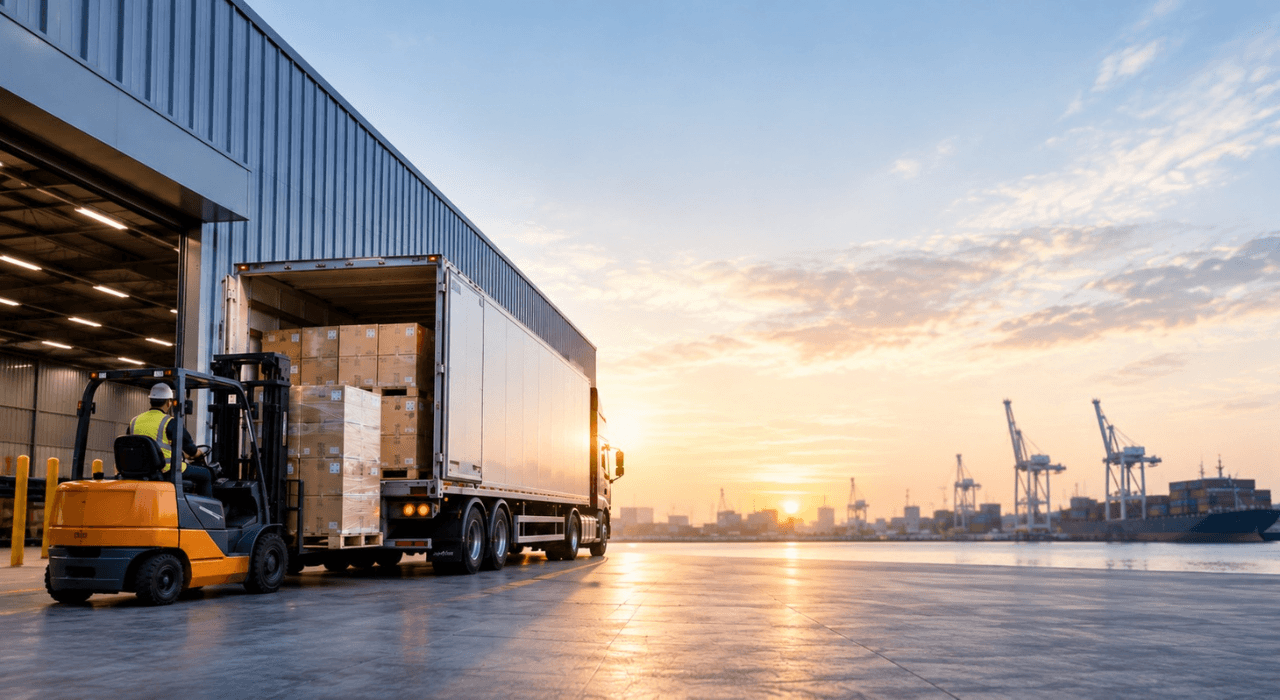
One late truck can throw off everything downstream. Miss the vessel's cut-off and the shipment waits days for the next sailing. Don't book rail early enough after import clearance and the containers sit at the terminal piling up detention charges.
So logistics teams end up syncing truck arrivals with vessel schedules, booking rail slots before cargo even reaches port, confirming warehouses are ready before arrival, planning loading and unloading windows, and making sure equipment is actually available at each stage. None of it is glamorous. It just cuts down the dead time between modes.
3. Getting the Documentation Right
A perfectly planned shipment can still stall over paperwork. Commercial invoices, packing lists, bills of lading, shipping bills, e-way bills, customs declarations, certificates of origin, regulatory approvals one mismatch anywhere in that stack and things stop moving.
An exporter might list one HS Code on the invoice and a different one shows up on the customs form. That alone can trigger extra inspections and hold up clearance for the whole shipment. It's why decent providers of freight forwarding services in India check documents at every milestone rather than finding out about an error from a customs officer.
4. Staying Visible Across the Journey
Knowing a shipment left the warehouse isn't enough anymore. Businesses want to see where it actually is departure, port arrival, customs clearance, container release, rail movement, truck dispatch, final delivery.
A manufacturer importing machinery for a new production line, for example, hears the vessel is running two days late. If they know that in advance, they can shift the installation schedule. If they don't, they find out on the day the delivery was supposed to arrive and scramble. That kind of visibility is really what feeds better inventory planning and fewer last-minute fires.
5. Planning for Things Going Wrong
Nothing in this chain is immune to disruption port congestion, vessel changes, bad weather, road closures, rail delays, customs holds, equipment shortages, take your pick.
The Red Sea situation is a recent case worth pointing to. Security concerns pushed several shipping lines to reroute around the Cape of Good Hope, which stretched transit times and backed up ports that weren't built for the extra volume. Companies locked into fixed plans just absorbed the delay. Companies with more flexible logistics strategies adjusted inland transport, revised inventory plans, and came out the other side with less damage. Being able to reroute cargo or grab alternate capacity fast has stopped being optional.
A Real-World Example
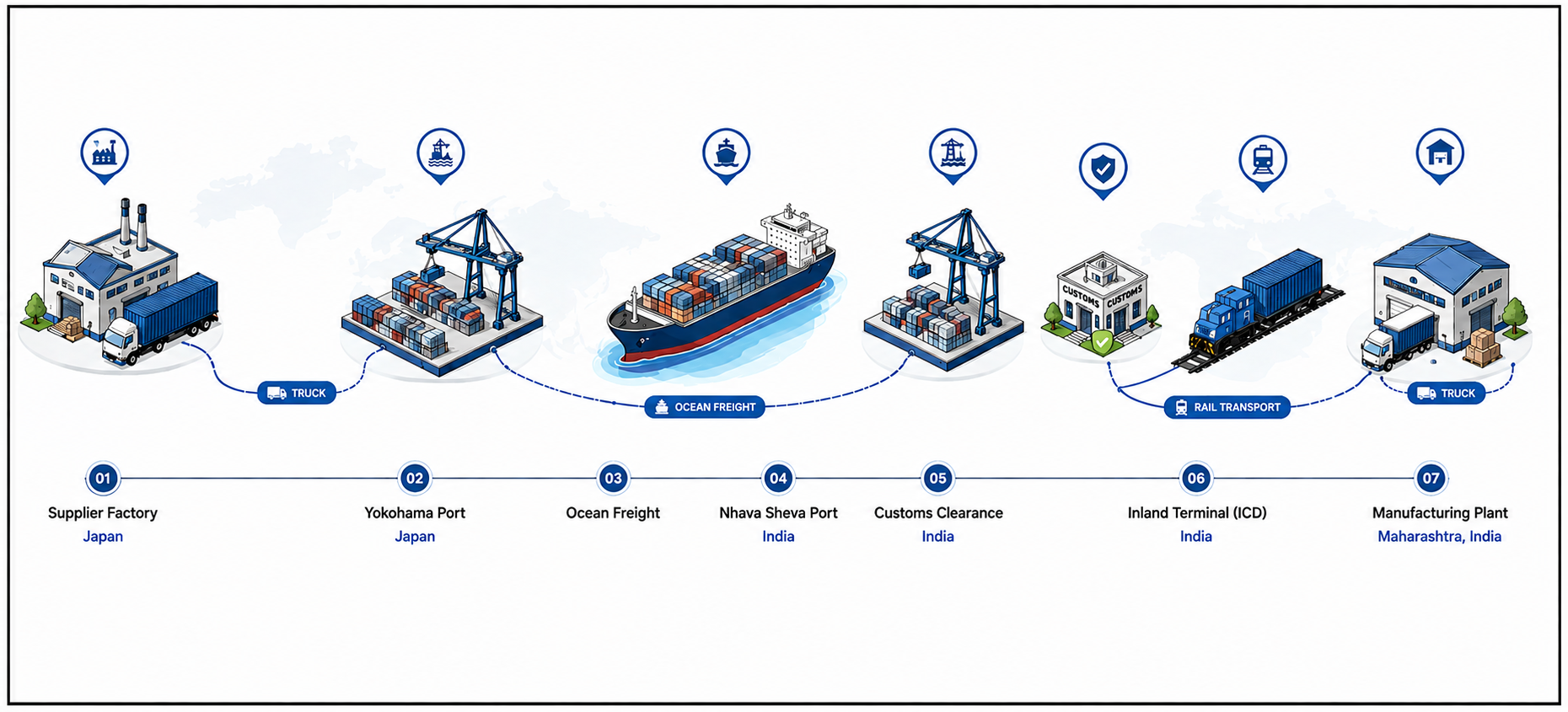
Picture a company importing industrial automation equipment from Japan to a plant in Maharashtra. Truck from the supplier's factory to the Port of Yokohama. Sea freight to Nhava Sheva. Customs clearance there. Rail to an inland terminal. Truck for the final leg to the customer's site.
Four mode changes, one operation. Every handover has to land on schedule, because a delay at any single point ripples into production timelines, inventory, and customer commitments down the line. That's really the whole logic behind multimodal transport it only works when it's coordinated as one continuous move.
The Role of a Freight Forwarder
Coordinating all this pulls in shipping lines, trucking companies, rail operators, customs authorities, port terminals, warehouses, and a handful of other service providers, often at the same time. A freight forwarding company in India sits in the middle of that mess planning routes, booking across ocean, rail, road and air, handling customs clearance, checking documentation, coordinating warehouses, tracking cargo, and fixing whatever breaks along the way.
Why Multimodal Freight Matters More Now
India's manufacturing base and trade volumes keep growing, and supply chains are getting more tangled with them cargo crossing ports, inland container depots, rail networks, highways, and warehouses before it ever reaches wherever it's actually going.
For companies working in international freight forwarding, that translates into more flexibility on routing, better visibility, more reliable transit times, lower costs, and faster movement whether the shipment is domestic or international. The ones getting this right aren't treating each leg as a separate job they're running the whole shipment as one operation from the start.
Conclusion
Multimodal freight transport comes down to how well the different legs are stitched together, not how many of them there are. Route planning, documentation, scheduling, real-time visibility none of it does much on its own. It only works as a system.
At Isa Logistics, we handle multimodal freight through integrated freight forwarding services, customs expertise, and end-to-end shipment coordination, so businesses can move cargo across domestic and international markets without having to hold their breath at every handover.
Frequently Asked Questions
1. What is multimodal freight transport?
It's when a shipment moves through two or more transport modes say road, then sea, then rail but it's all booked and managed under one contract, as a single journey, through a single provider of freight forwarding services, instead of the customer stitching together separate bookings themselves.
2. How does multimodal transport improve supply chain efficiency?
Mainly by cutting down the dead time between transport legs. When someone's actively managing the handovers, shipments spend less time sitting at ports or terminals, which usually shows up as lower logistics costs and fewer delays overall the whole point of good international freight forwarding.
3. What are the biggest challenges in coordinating multimodal freight?
Getting the connections between modes to actually line up is the big one. After that it's documentation errors, customs holds, port congestion, and just not having the right equipment available when a shipment needs it. This is where project cargo logistics in particular gets complicated, since oversized or heavy cargo adds route surveys and permits on top of everything else.
4. Why does shipment visibility matter in multimodal transportation?
Because finding out about a delay after it's already happened is a lot less useful than finding out while there's still time to adjust. Real-time visibility means a business can shift a production schedule or reroute inventory before the delay actually costs them something which is a core part of what decent freight forwarding services in India are expected to provide now.
5. What does a freight forwarder actually do in multimodal logistics?
They plan the route, book the carriers for each leg, sort out customs clearance and paperwork, keep track of where the cargo actually is, and act as the single point of contact between everyone involved the shipping line, the trucker, the customs broker, the warehouse. That's essentially the job description of a freight forwarding company in India working across multiple transport modes.
6. Which industries rely most on multimodal freight transport?
Mostly ones with complex, time-sensitive supply chains manufacturing, automotive, chemicals, pharma, engineering, retail, and companies dealing in heavy or oversized cargo that falls under project cargo logistics. Anywhere a delay actually costs real money.
7. Why work with Isa Logistics for multimodal freight?
Because instead of hiring separate people for freight forwarding, customs, and warehousing, you're working with one team offering integrated freight forwarding services, real international freight forwarding experience, and end-to-end coordination across domestic and global routes.